Table of contents
- No headings found
Understanding the $2.5 Trillion Global Liquidity Gap in Trade Finance
January 14, 2026

Every day, billions of dollars in goods and services cross borders, yet many businesses still face delays in payments and constrained cash flow. At the same time, financiers struggle to match supply with demand. That imbalance, often called the trade-finance gap, is estimated at around US $2.5 trillion globally
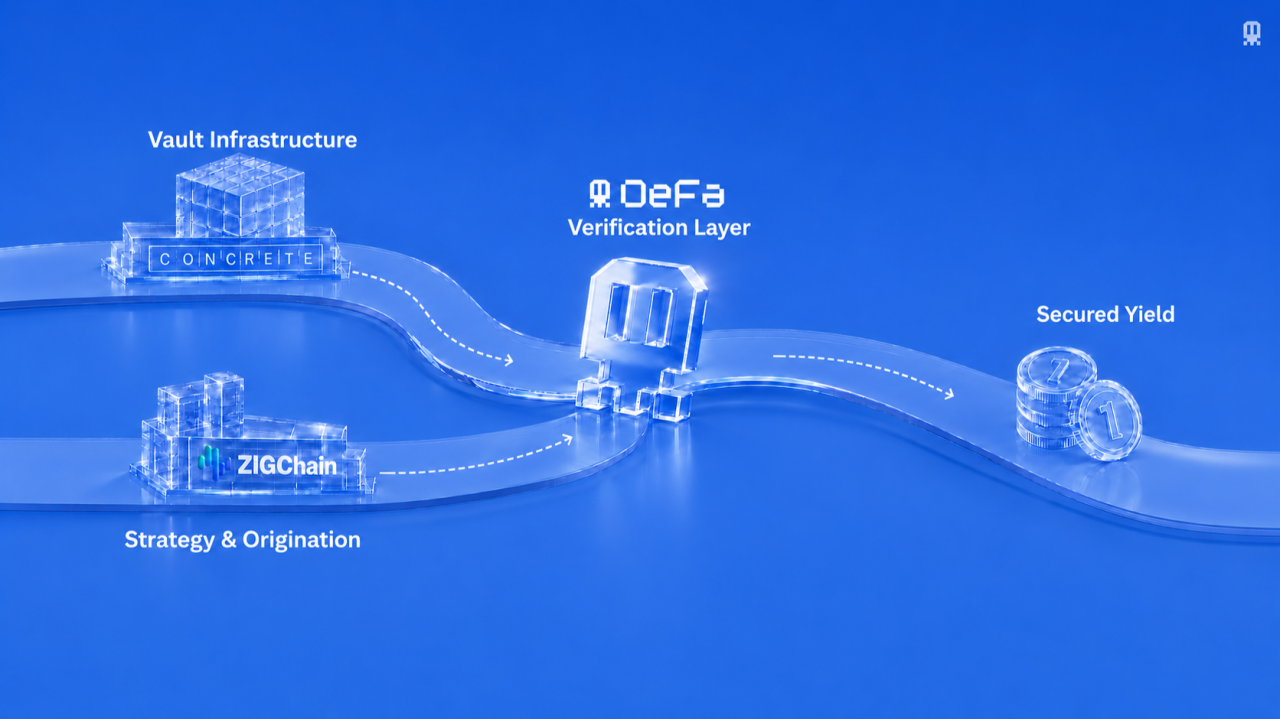
DeFa bridges this gap through verified business data and blockchain transparency, transforming trusted invoices into financeable, yield-bearing assets that unlock liquidity for businesses and offer secure, sustainable returns for investors.
Measuring the scale of the global trade-finance liquidity gap
When we discuss trade financing, we refer to tools such as invoice financing, factoring, supply-chain finance, and other working capital solutions that enable businesses to convert unpaid invoices into immediate cash. Despite the size of the market, many businesses, especially SMEs, are left underserved.
- According to recent industry estimates, the global factoring services market was valued at $3.567 trillion in 2022 and is expected to grow further.
- One report finds that the global invoice financing market was approximately $3.15 trillion in 2024, with strong growth ahead.
- Meanwhile, research highlights an SME financing gap that exceeds $5 trillion annually, representing those businesses that cannot secure needed funds in time.
- Trade-finance gap studies suggest that the shortfall in the supply of trade finance remains around $2.5 trillion.
Putting these data points together, we can see that somewhere in the range of $2 trillion to $5 trillion+ is left unmet every year in the working-capital/invoice-financing space.
Why does the global liquidity gap matter for businesses and economies?
Liquidity gaps in invoice financing ripple across the economy:
- Businesses struggle with cash flow. When suppliers or exporters must wait for payment or cannot convert unpaid invoices into cash, their operations are constrained. Growth, hiring, and investment are held back.
- Risk for banks and financiers. Traditional lenders often rely on heavy paperwork, collateral, and slow workflows. Many SMEs are rejected or underserved because they lack a perfect credit history or documentation.
- Inefficiencies in financing. Traditional lenders often rely on heavy paperwork, collateral, and slow workflows. Many SMEs are rejected or underserved because they lack a perfect credit history or documentation.
- Risk for banks and financiers. Many invoices sit on company books awaiting settlement, when they could be converted into immediate funding. That gap represents inefficiency and lost opportunity.
- Misalignment with DeFi/fintech potential. Meanwhile, decentralized finance (DeFi) and blockchain-based tools offer new ways to access liquidity, but these often rely on crypto-collateral, not real- world assets.
In short, there is a great demand for liquidity and invoice financing, yet an insufficient supply by traditional providers, creating what we can call the “invoice-liquidity gap”.

Introducing DeFa by InvoiceMate: A decentralized factoring protocol for verified invoicing
This is where DeFa by InvoiceMate comes into play.
InvoiceMate is a platform that offers blockchain- and AI-powered invoicing and invoice verification services, helping businesses digitize, verify, and manage their invoices.
DeFa is a “decentralized factoring protocol” built on top of InvoiceMate’s verified invoice infrastructure.
How it works
- A business issues an invoice for goods/services that were delivered.
- Using InvoiceMate’s system, that invoice is verified, i.e., delivery confirmed, buyer risk assessed, and payment history checked via Know Your Invoice (KYI).
- That verified invoice becomes a tokenized real-world asset, essentially converted into a real-world asset (RWA) that can be financed.
- DeFi investors or liquidity providers deposit stablecoins into DeFa’s pools. These pools fund the verified invoices, effectively bridging crypto liquidity with real trade receivables.
- Investors earn yields based on the invoice settlement, while businesses get faster access to cash. Meanwhile, the risk is mitigated through the verification layer and credit insurance mechanisms.
Key innovations that make DeFa unique
- It links real-world trade with onchain liquidity, rather than relying only on crypto-collateral.
- It uses verified invoices (via InvoiceMate’s system) to increase trust and reduce risk.
- It aims to address the liquidity gap by providing finance where traditional systems may have been too slow, pricey, or inaccessible.
- Investors can tap yields that are not purely speculative but backed by actual business activity.
Traditional financing of invoices is effective, but often:
- Requires heavy documentation and manual verification
- It is limited by bank risk appetite, geography, or the size of the business
- Can be slow, costly, and opaque
Whereas DeFa offers:
- Speed: Verified invoices can be tokenized and financed onchain more quickly than traditional loans.
- Access: Businesses in underserved markets (e.g., emerging economies) may gain access to new liquidity sources.
- Transparency: Blockchain verification provides audit trails and verifiable data.
- Yield opportunity: Investors who provide liquidity can earn returns backed by real trade, not just market speculation.
In effect, decentralized liquidity helps unlock the trapped value in unpaid or delayed invoices, making them investable and financing-capable in a global, borderless way.

What this means for businesses & investors
- For SMEs: Instead of waiting 30 to 90 days, or sometimes even longer, to get paid, businesses can access advanced cash flows by selling or discounting verified invoices via InvoiceMate and DeFa. That frees up working capital, enables growth, and reduces pressure.
- For investors and liquidity providers: Rather than staking crypto or participating in volatile yield farms, they can allocate capital to pools of verified trade receivables, earning returns from real-world business activity.
- For the global market: Closing even a fraction of the $2-5 trillion gap would free up enormous capital, accelerating trade, growth, employment, and innovation.
Conclusion
The global “liquidity gap” in invoice financing is real and substantial, with trillions of dollars of demand unmet each year. Traditional finance alone cannot fully bridge that gap. In a world where trade keeps expanding and SMEs remain underserved, the intersection of blockchain, AI, and decentralized finance may well hold the key.
DeFa shows how verified invoices can become the foundation of a new financial model, one that turns dormant assets into live-streams of capital, for both business and investor benefit. They combine verified trade data, tokenization of real-world assets, and decentralised liquidity to unlock working capital for businesses and yield opportunities for investors.